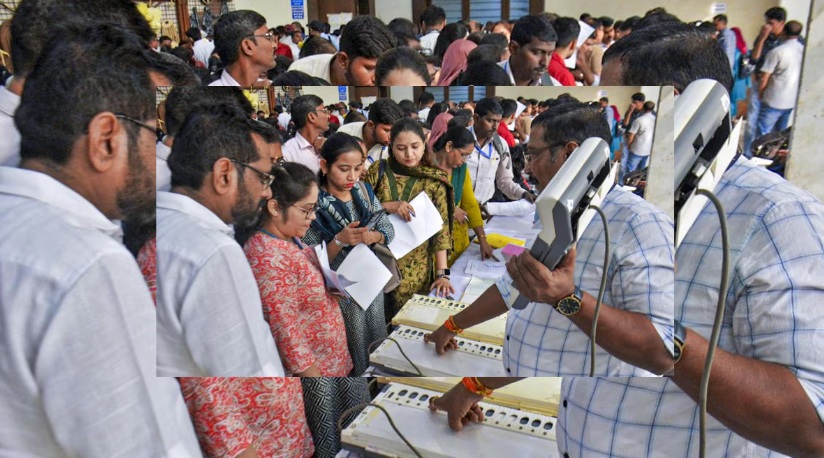
Maharashtra, India’s most urbanized state, is an engine of economic growth, driven by its dynamic cities—from the megacity of Mumbai to the bustling hubs of Pune, Nagpur, Nashik, and beyond. The administration of these complex urban landscapes falls upon a critical tier of local governance: the Mahanagar Palika, or Municipal Corporation. These institutions are the bedrock of civic life, directly impacting the daily existence of millions of citizens. The 2026 Maharashtra Municipal Corporation elections have just concluded, ushering in a seismic political shift, most dramatically witnessed in the crown jewel—the Brihanmumbai Municipal Corporation (BMC).
What is a Mahanagar Palika?
A Mahanagar Palika is an urban local self-government body constituted for a city with a population typically over 3 lakh (300,000). Established under the Maharashtra Municipal Corporations Act and the 74th Constitutional Amendment Act of 1992, they are designed to ensure democratic decentralization. Maharashtra has over 27 Municipal Corporations, with the BMC being the richest and most prominent in the country.
The 2026 Electoral Verdict: A Political Earthquake in Mumbai and Beyond
The 2026 elections, held after prolonged delays and legal battles, were a direct contest for the soul of Maharashtra’s urban governance. The results have redefined political equations, with Mumbai’s outcome sending shockwaves across the state.
1. The Mumbai Masterstroke: UBT’s Decisive Reclamation
The story of 2026 is, unequivocally, the story of Mumbai. The Brihanmumbai Municipal Corporation (BMC), with its budget larger than several Indian states, was the ultimate prize.
- Result: Shiv Sena (UBT), led by Uddhav Thackeray, secured a stunning clear majority, winning approximately 130 out of 227 seats. This marks a dramatic comeback after the party’s split in 2022 and the subsequent administration by a state-appointed administrator.
- The Verdict: This victory is widely interpreted as Mumbai’s endorsement of Uddhav Thackeray’s brand of Shiv Sena politics, combined with a strong anti-incumbency wave against the perceived mismanagement and policy paralysis during the administrator’s rule. The campaign, heavily focused on local issues like infrastructure delays, flooding, and transparency, resonated deeply with Mumbaikars.
- Key Takeaway: The “Mumbaikar vs. Outsider” narrative, coupled with a robust grassroots network, propelled UBT to victory.
2. The BJP’s Strategic Setback & Regional Hold
The BJP, which had aggressively campaigned to capture the BMC for the first time in its history, faced a significant setback.
- Result: The party emerged as the second-largest group but with a tally far below expectations (approx. 75 seats). Its strategy of relying on central leadership and a development-focused narrative failed to counter UBT’s emotive, local connect.
- The Silver Lining: The BJP retained strong control in its traditional bastions like Nagpur (the home turf of Deputy CM Devendra Fadnavis) and performed solidly in Pune and Pimpri-Chinchwad, showcasing its continued organizational strength in western Maharashtra.
3. The Shiv Sena (Shinde) Faction’s Decline
The Eknath Shinde-led Shiv Sena, which heads the state government as part of the Mahayuti alliance, faced the most severe erosion.
- Result: The faction was relegated to a distant third in Mumbai (approx. 15 seats) and failed to make a significant mark in other major corporations. This result raises serious questions about its long-term viability as an independent political force outside its Konkan strongholds.
- Implication: The election proved that control of the state machinery and the “original Shiv Sena” symbol could not translate into votes without the grassroots credibility commanded by UBT.
4. The MVA’s Resurgence & Coalition Dynamics
The Maha Vikas Aghadi (MVA) alliance (Congress, Shiv Sena (UBT), NCP (SP)) proved effective. While UBT led the charge in Mumbai, Congress and NCP (SP) played crucial roles in splitting the anti-UBT vote in key wards and securing their own seats, contributing to the alliance’s overall success in Thane, Nashik, and other regions.
Structure and Governance in the New Political Reality
Mumbai’s result has set the stage for a unique power dynamic:
- The New Mumbai Mayor: For the first time in over two decades, the Mayor of Mumbai will be from a party (Shiv Sena UBT) that is in direct opposition to the state government. This sets up an inevitable, high-stakes tussle over administrative control, budget sanctions, and policy implementation between the UBT-led BMC and the BJP-Shinde state government.
- The Commissioner Conundrum: The appointment and tenure of the Municipal Commissioner, the all-powerful IAS officer, will be a major flashpoint. The UBT will demand an officer willing to cooperate, while the state government will seek to retain influence.
- The Standing Committee: Control of this financial powerhouse is the immediate political battle. UBT will aim to dominate it to push its agenda without obstruction.
Key Functions and the Mumbai Mandate
The UBT administration in Mumbai faces the colossal task of translating its comeback narrative into governance:
- Immediate Priorities: Clearing pending infrastructure projects (coastal road, sewerage lines), tackling chronic flooding, and streamlining the corrupt perception in the building proposal department.